

How to Style a Jalabiya for Formal Events: 2026 Guide
Table of Contents
- Start With the Right Foundation: Fit, Silhouette, and Length
- The Best Fabrics for Formal Jalabiyas
- Styling a Jalabiya With Jewelry and Accessories
- Formal Kaftan Outfit Ideas for Weddings and Galas
- Footwear, Bags, and Finishing Details
- Layering for Cooler Months and Professional Settings
- Balancing Embroidery, Color, and Embellishment
- Conclusion
- Frequently Asked Questions
Last Updated: September 22, 2026
Start With the Right Foundation: Fit, Silhouette, and Length
Fit matters more than any accessory. A formal jalabiya that pulls at the shoulders or pools at the hem will never look polished, however good the fabric.
Choosing a Silhouette That Flatters Your Frame
Let your body type guide the cut.
- Taller and leaner builds: A straight or slightly tapered cut keeps clean lines without adding bulk.
- Broader shoulders or chest: A structured shoulder seam with a gentle flare below the waist balances the frame.
- Shorter frames: A slimmer cut with a shorter hem avoids being swallowed by fabric.
- Fuller builds: A relaxed drape through the midsection, with structure at the shoulder, creates a cleaner line.
Waist definition separates a formal jalabiya from an everyday thobe. A subtle taper or belt-style sash gives the eye a focal point.
Getting the Length and Drape Right
Formal jalabiyas should fall at or just above the ankle bone. Longer drags and looks sloppy; shorter reads casual.
The Best Fabrics for Formal Jalabiyas
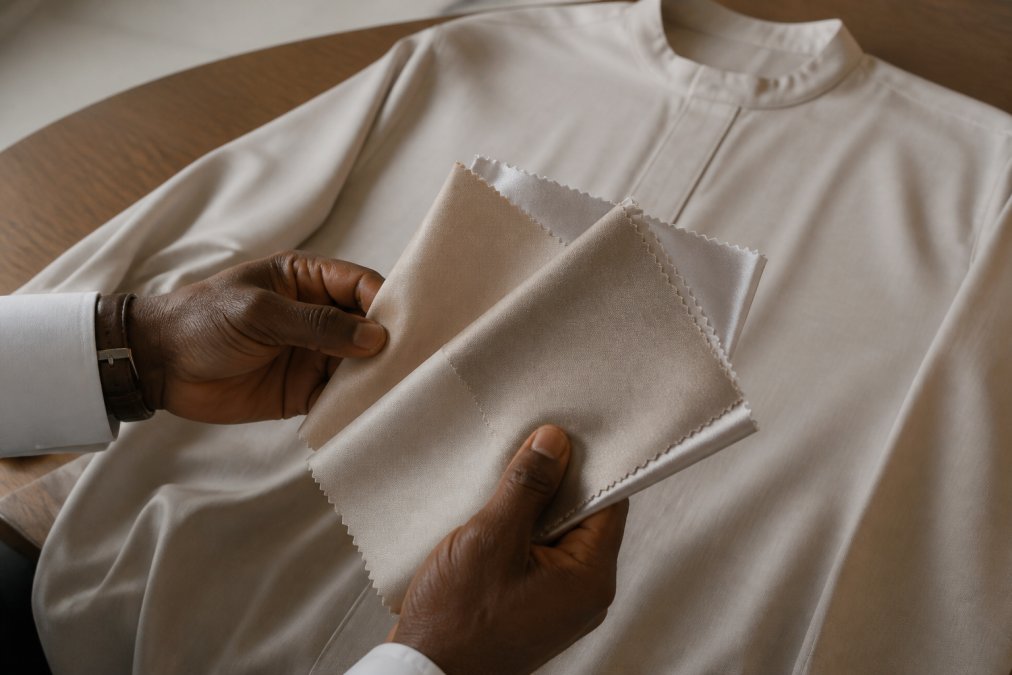
Fabric is the biggest factor in how formal a jalabiya looks. Crepe, silk, and structured blends all work, but each behaves differently on the body and in photographs.
Crepe, Silk, and Structured Blends Compared
Crepe is the workhorse: it holds shape, resists wrinkles, drapes without clinging, and photographs beautifully under event lighting.
Fabric |
Best For |
Drape |
Care Level |
|---|---|---|---|
Crepe |
Weddings, galas |
Holds shape, soft fall |
Low |
Silk |
Evening events |
Flowing, fluid |
High |
Structured blend |
Long events, travel |
Firm, clean lines |
Low |
Styling a Jalabiya With Jewelry and Accessories
Jewelry should support the jalabiya, not compete with it. The garment already carries visual weight through cut, fabric, and embroidery; heavy jewelry tips the balance.
Match Metal Tone to the Garment's Hardware
Before you pick a single piece, look at what is already on the jalabiya.
- Gold thread or gold-toned buttons: stay in the gold family, yellow gold, rose gold, or warm brushed brass. Bright silver clashes at close range and in flash photography.
- Silver thread, steel buttons, or no metallic detail: silver, white gold, or brushed steel keeps the palette clean.
- Two-tone or mixed embroidery: pick the metal closest to your face (collar, placket, chest) and repeat only that one.
Scale the Piece to the Neckline
The neckline decides how much jewelry the garment can absorb.
- Mandarin or high collar: skip necklaces entirely, a close collar leaves no room for a chain, and layering bunches the fabric. Emphasize a ring or cufflinks instead.
- Open or V-neck placket: a single thin chain falling just above the sternum works; anything longer disappears into the chest embroidery.
- Deep open front over a base layer: a slightly longer chain can work, but keep the pendant small and centered so it does not drift off-axis.
Rings, Watches, and Cufflinks: The Working Rules
- One ring, maximum two. A single clean design or subtle stone reads formal; stacking rings or one on each hand reads casual.
- A slim watch in gold, silver, or brushed steel, matched to your other pieces. A thick sports or dive watch with a rubber strap breaks the formal sleeve line.
- Simple cufflinks if your jalabiya has a formal cuff, in the same metal as the watch case, a different metal is the most common mismatch at formal events.
What to Leave Off
- Skip bracelets on both wrists. One thin bracelet on the watch-free wrist is the ceiling.
- Skip layered chains. They tangle, shift, and photograph as a blur.
- Skip anything that jingles when you move. Sound draws attention to the accessory rather than the garment.
A Quick Pre-Event Check
Stand before a mirror under the event's lighting, warm indoor light, not daylight. Check three things: does the metal match the garment hardware, does the neckline stay clean, and does anything move or make noise when you turn? If all three pass, you are done.
Formal Kaftan Outfit Ideas for Weddings and Galas
A formal kaftan and a formal jalabiya share styling logic, but kaftans often carry more embellishment. That changes how you build the rest of the outfit.
Three outfit formulas that work:
- Wedding guest: Neutral crepe kaftan, slim watch, leather sandals, small clutch
- Gala evening: Dark structured kaftan, single ring, polished loafers, no bag
- Daytime formal: Light kaftan with subtle embroidery, thin chain, flat sandals, crossbody bag
Footwear, Bags, and Finishing Details
Footwear can make or break the look: the hem sits close to the ankle, so your shoes are fully visible.
Layering for Cooler Months and Professional Settings
Layering is where most styling guides stop and real skill shows. A formal jalabiya works in cooler weather and professional settings, but the rules differ from layering a Western suit, and getting them wrong flattens the drape you paid for.
The Core Principle: Layer Over, Not Under
A jalabiya is a long, single-piece garment. The instinct is to add warmth underneath, the way you would with a shirt, usually the wrong move.
- Under-layers add bulk at the chest and shoulders, exactly where a formal jalabiya needs to stay close to the body; a thermal or heavy base layer pushes the fabric out and destroys the silhouette.
- Over-layers preserve the garment's line and add warmth without touching the fit, the approach most experienced wearers take.
Cooler Months: Choosing the Right Outer Layer
The outer layer must be unstructured. Anything with a stiff shoulder or padded chest will fight the jalabiya underneath and create a lumpy line.
- Long wool or wool-blend coat: the safest choice. Look for a soft shoulder, no padding, and a length at or below the jalabiya hem. A neutral tone, camel, charcoal, navy, keeps the focus on the garment.
- Open overshirt or shacket: works for transitional weather. Keep it unbuttoned so the jalabiya's vertical line stays visible; a linen-blend or light wool overshirt in a tonal shade layers cleanly.
- Avoid: puffer jackets, structured blazers with padded shoulders, and heavy collars that sit up around the neck, they break the neckline and add visual weight where the jalabiya is already detailed.
Professional and Corporate Settings
The corporate formal gap is real: most guides treat the jalabiya as occasion wear only. It works in an office, but the styling has to shift toward restraint.
- Color: solid, dark tones, charcoal, navy, deep grey, black. Skip ivory and sand; they read as event wear.
- Embellishment: none, or the barest minimum. No beadwork, metallic thread, or visible embroidery, the cut and fabric carry the look.
- Waist: skip the sash or belt if the dress code leans corporate; a defined waist reads as occasion styling, a clean straight line as business.
- Accessories: a slim watch and one ring. No cufflinks unless the shirt cuff is genuinely formal. A structured leather bag or slim briefcase replaces the clutch.
- Footwear: polished loafers or closed-toe leather shoes in a dark tone. No sandals.
Transitional Weather: The Hardest Case
Spring and fall are the tricky months, warm afternoons, cold evenings. The practical solution is a light linen-blend jalabiya as the base, with an open overshirt or thin unstructured coat carried rather than worn during the day, so you can add or remove the outer layer without changing the garment underneath.
- Cooler months: unstructured wool coat, closed-toe leather shoes, thin tonal scarf
- Corporate settings: solid dark jalabiya, no embellishment, structured leather bag, polished loafers
- Transitional weather: light linen-blend jalabiya, open overshirt, loafers, layer carried not worn
Balancing Embroidery, Color, and Embellishment
Embellishment is the fastest way to make a jalabiya look either expensive or cheap. The difference comes down to restraint.
Conclusion
Styling a jalabiya for formal events comes down to fit, fabric, and restraint. Get the silhouette right, choose a fabric that drapes well, and let one or two details carry the look.
Frequently Asked Questions
How do you style a jalabiya for a formal event?
Start with a well-fitted formal jalabiya in a structured fabric like crepe or a silk blend. Keep accessories minimal: a classic watch, simple cufflinks, and leather loafers or dress shoes. Choose a neutral palette (navy, charcoal, cream) with subtle metallic thread embroidery. A tailored fit through the shoulders and chest is essential. Finish with a leather clutch or slim crossbody bag for essentials, and ensure the length falls just above the ankle for a clean, modern line.
What accessories pair best with a formal jalabiya?
Less is more for formal styling. A minimalist watch, a single ring, and understated cufflinks work well. For footwear, opt for leather loafers or polished dress shoes in black or brown. A structured leather clutch or slim crossbody bag keeps hands free. If you wear a sheela or headscarf, choose a tone that complements the jalabiya's base color. Avoid chunky or overly decorative pieces that compete with the garment's embroidery or beadwork.
Can a jalabiya be worn in a professional setting?
Yes, with the right styling. Choose a jalabiya in a solid, dark neutral like navy, charcoal, or black with minimal embroidery. Pair it with a structured blazer or tailored coat, leather dress shoes, and a simple watch. The key is clean lines and a precise fit. Avoid flowing, heavily embellished styles for the office. A well-tailored jalabiya in a matte fabric reads as sophisticated and culturally proud in professional contexts.
What is the difference between a kaftan and a jalabiya?
A kaftan is a loose, flowing garment often worn as a dress or tunic, with origins across North Africa and the Middle East. A jalabiya is typically a long robe or gown with a more structured, straight cut, popular in West and North Africa. For formal wear, jalabiyas tend to have a more tailored silhouette and are often paired with trousers or worn alone. Kaftans are generally more relaxed and draped. Both can be styled for formal events with the right fabric and accessories.