

Can Bespoke Clothing Be Rushed? A 2026 Guide
Table of Contents
- Can Bespoke Clothing Be Rushed? What's Actually Possible
- Standard Production Timelines for Bespoke Garments
- What Affects Bespoke Tailoring Turnaround Time
- The Impact of Rush Orders on Garment Quality
- What a Rush Fee for Custom Suits Actually Covers
- A Rush Order Checklist for Clients on a Deadline
- Alternative Solutions When the Deadline Is Too Tight
- Frequently Asked Questions
Last Updated: September 23, 2026
Can Bespoke Clothing Be Rushed? What's Actually Possible
Yes, bespoke clothing can be rushed, but only when the tailor has the fabric in stock and the workshop has open capacity. The honest answer is that not every bespoke commission can be compressed, and the ones that can usually come with a rush fee and a shorter fitting window. This guide from FnB Designs walks through what a rushed bespoke commission really involves, from production timelines to the trade-offs you accept when you ask a tailor to move faster.
Most men ask this question six weeks before a wedding, not six months. That timing changes everything about what's possible. A bespoke garment normally moves through consultation, pattern drafting, a first fitting, adjustments, and finishing. Each stage needs time, and skipping stages has consequences.
Below, we'll show you exactly how rush service works and when to choose an alternative instead.
Competition Bureau guidance on misleading business claims
Standard Production Timelines for Bespoke Garments
A standard bespoke commission takes four to twelve weeks from first consultation to final delivery. The exact lead time depends on the garment, the fabric, and how many fittings your tailor builds into the schedule.
Here's how that breaks down by garment type:
Garment |
Typical Lead Time |
Fittings Needed |
Rush Possible? |
|---|---|---|---|
Custom suit |
3-6 weeks |
2-3 |
Yes, with limits |
4-10 Days |
1-2 |
Yes, usually |
|
Kaftan |
3-6 6 |
1-2 |
Often yes |
Isiagu |
4-10days |
1 |
Depends on fabric |
Jalabiya |
3-6 weeks |
1 |
Usually yes |
Typical Lead Times for Agbada, Kaftans and Custom Suits
Agbada and kaftans often move faster than a structured suit. They involve less internal construction, so the sewing time is shorter. A custom suit takes longer because of the canvas, lining, and multiple fittings.
For grooms and groomsmen ordering together, add one to two weeks for group coordination. Getting six men measured, fitted, and aligned takes longer than one.
What Affects Bespoke Tailoring Turnaround Time
Turnaround time depends on four things: fabric availability, workshop workload, the number of fittings, and the complexity of the design. Change any one of these and your timeline shifts.
Fabric availability is the biggest factor. If your chosen cloth is in stock, production starts immediately. If it needs to be sourced, add one to three weeks before any cutting begins.
Workshop capacity matters just as much. A tailor with a full schedule cannot simply squeeze in a rush job without pushing another client back. Good tailors protect their existing commitments.
The Fabric In-Stock Variable
The fabric in-stock variable is the single most common reason a rush order succeeds or fails. Ask one question first: is the cloth already in the workshop?
- In stock: production can start within days
- Needs sourcing: add one to three weeks
- Special order or limited run: timeline is unpredictable
The Impact of Rush Orders on Garment Quality
A rushed garment does not have to be a lower-quality garment, but compression has limits. The risk is not the sewing. It is the fitting process.
Bespoke quality comes from adjustments made across multiple fittings. Cut that from three fittings to one, and small fit issues may survive to the final garment. A skilled master tailor can compensate with careful pattern drafting, but there is less room for correction.
Where quality suffers most:
- Sleeve and shoulder alignment on structured suits
- Hand-stitched detailing that takes fixed time
- Final alterations that need a second pass
Where quality usually holds:
- Fabric selection and cutting
- Basic construction and finishing
- Simple garments like kaftans and jalabiyas
Canadian Centre for Occupational Health and Safety on workplace safety standards
What a Rush Fee for Custom Suits Actually Covers
A rush fee is not a convenience charge. It is the price of reordering a workshop's production schedule, and understanding what it actually pays for can help determine if a quote is fair or inflated.
When a tailor accepts a rush commission, three cost centers move at once:
Priority cutting and queue displacement. Your garment jumps ahead of commissions already in progress. That means another client's work is pushed back, and the tailor absorbs the relationship cost of that delay. The fee compensates for the disruption, not just the speed.
Overtime and additional labor hours. A garment that normally moves through the workshop across several weeks gets compressed into fewer days. That often means evening or weekend hours for cutters, sewers, and finishers. In a small atelier, one rush job can pull two or three people into overtime.
Expedited fabric sourcing and courier costs. If the cloth is not already on the shelf, the tailor may pay for faster shipping from a mill or distributor, or for a courier to move the finished garment. These are pass-through costs, and they vary widely by fabric and distance.
A compressed fitting schedule. Fittings that would normally be spaced a week apart get stacked into consecutive days. That requires the tailor to block time that would otherwise go to other clients.
How Rush Fees Are Usually Calculated
Rush fees often fall into one of three structures:
- Flat percentage uplift.
- Tiered by garment complexity.
- Case-by-case quote. Many ateliers quote rush fees individually based on the garment, the fabric, and the timeline. This structure often reflects actual cost rather than a blanket markup.
What the Fee Does Not Cover
A rush fee buys speed. It does not buy a guarantee. Two things are commonly misunderstood:
- It does not guarantee the delivery date. It improves the odds, but fabric delays, illness, or equipment failure can still push a date. Always confirm the delivery date in writing and ask what happens if it slips.
- It does not cover alterations after delivery. If the compressed fitting schedule leaves a fit issue, the cost of correcting it may fall outside the rush fee. Ask about the alteration policy before you pay.
Competition Bureau guidance on misleading business claims
A Rush Order Checklist for Clients on a Deadline
A rush order works when you prepare before you contact your tailor. Use this checklist to move fast without losing quality.
- Confirm your event date and work backward at least two weeks
- Ask whether your chosen fabric is in stock
- Book your consultation immediately, not next week
- Have your measurements ready or attend in person
- Choose a simpler design if time is tight
- Confirm the delivery date in writing
- Ask about the alteration policy if the fit is off
- Pay the rush fee only after the timeline is confirmed
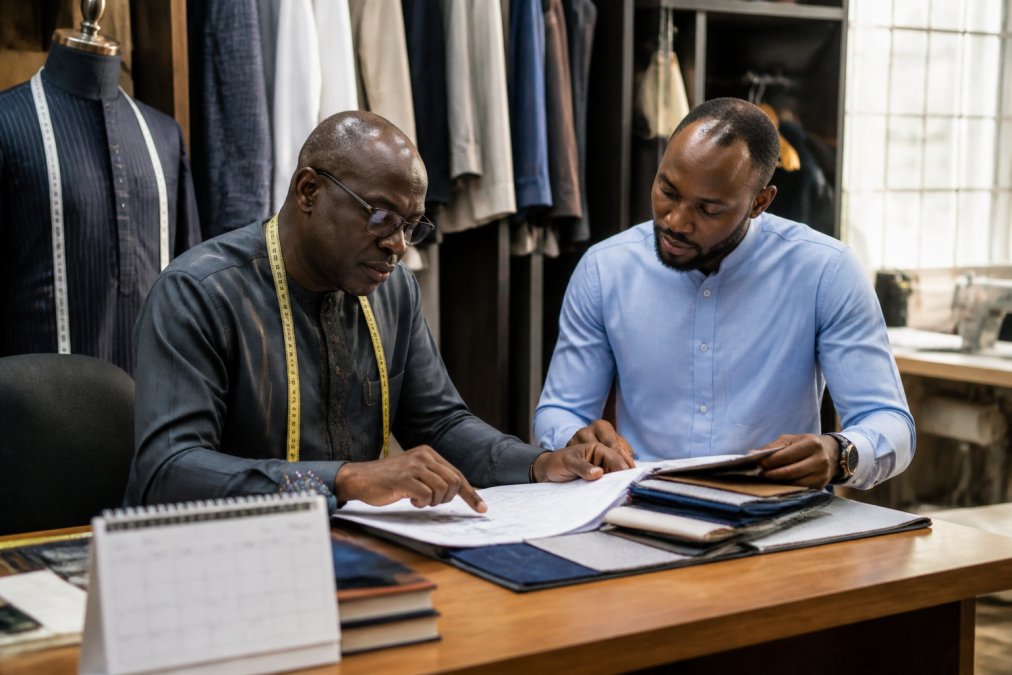
Alternative Solutions When the Deadline Is Too Tight
When the deadline is too tight for full bespoke, you have three realistic options. Each trades something different.
Made-to-measure uses an existing pattern adjusted to your measurements. It skips the multiple fittings of full bespoke, so it moves faster. You lose some of the hand-stitched detail and precise pattern drafting that define a bespoke commission.
Ready-to-wear with alterations is the fastest path. Buy a well-fitting garment and have it adjusted locally. This works well for groomsmen who need to match quickly.
A simplified bespoke design keeps the custom fit but cuts construction time.
Frequently Asked Questions
What is the typical turnaround time for bespoke menswear?
Most bespoke commissions take six to twelve weeks from consultation to final fitting. That window covers pattern drafting, fabric sourcing, construction, and at least one fitting. Made-to-measure garments move faster, often three to five weeks, because the pattern is adjusted from an existing block rather than built from scratch. Rush service compresses that schedule when fabric is in stock and the workshop has capacity.
Does rushing a bespoke order affect the quality of the garment?
It can, but not automatically. The impact of rush orders on garment quality depends on what gets compressed. Speeding up shipping or prioritizing your commission in the production queue rarely changes the finished piece. Skipping a fitting, cutting hand-stitched finishing, or forcing a master tailor past a reasonable workload is where quality drops. Ask which steps are being shortened before you agree to a rush.
How much does a rush fee usually cost for custom tailoring?
A rush fee for custom suits and traditional garments varies by workshop, deadline, and how much overtime or re-sequencing the order requires. Pricing depends on quantity, dates, and delivery, so there is no single figure that applies across the board. Request a written quote that separates the base garment price from the expedite charge.
Can I get a custom-fitted suit in less than two weeks?
In some cases, yes, but it depends on fabric availability, your measurements being on file, and the tailor's workload capacity. A two-week window usually rules out a full bespoke commission with multiple fittings. Made-to-measure or a well-altered ready-to-wear piece is often the more realistic route. If you already have measurements with a tailor, the process moves faster because pattern drafting can start immediately.
A tight deadline does not have to mean a compromise on how you look. At FnB Designs, we help clients choose the right path, whether that is a full bespoke commission, a made-to-measure piece, or a rush order built around your event date. Our team guides you from consultation through final fitting, with expertise in Agbada, Isiagu, kaftans, and custom suits. Get started with FnB Designs and step into your occasion looking sharp, intentional, and well-fitted.